



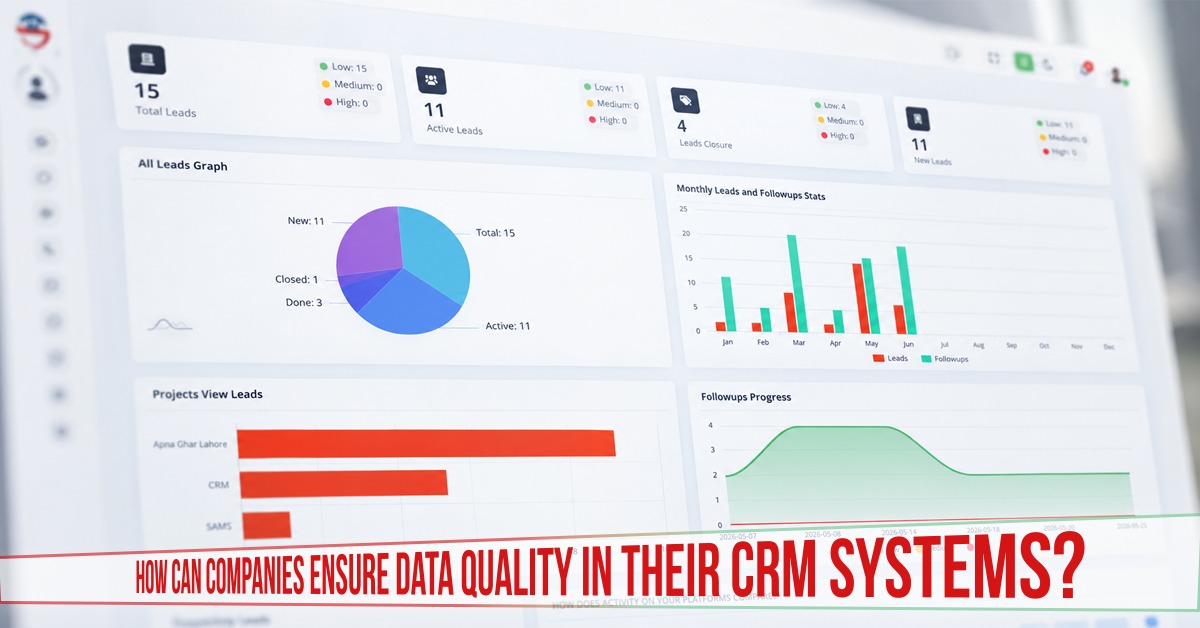
Though AI can provide valuable insights, improve workflows, and gain a better understanding of customer behavior, the quality of data fed into AI is crucial to its effectiveness. Reliable and complete CRM records are essential for the effective functioning of the AI system and can make it easier to scale up otherwise excellent projects.
Introduction
AI is playing an increasingly significant role in today’s customer relationship management. AI is helping businesses find sales leads, tailor their messaging, predict customer behaviour, handle repetitive work tasks, and streamline decision-making.
But AI can’t generate accurate data from unreliable data. However, a CRM with thousands of customer records can have inaccurate contact information, duplicate profiles, missing fields, obsolete data, and inconsistent formatting, which can make it hard for AI systems to understand the true picture of the customer landscape.
So, before businesses can hope to revolutionize their CRM processes with AI, they should first tackle the issue of data quality.
AI cannot perform tasks accurately unless the data it is trained on is accurate.
AI systems rely on patterns in the data that they are fed. Those patterns can be misleading when the information in CRM is missing or incorrect.
For instance, when a customer is listed multiple times in different records, an AI system could mistake them for different customers. Likewise, if there are any misspellings or missed updates in purchase history, the recommendations won’t be correct.
It’s not always the AI model; it’s a problem. The data that lies under it may just not be of a reliable quality to be used for analysis.
Duplicate records create confusion and can lead to incorrect information being provided.
When data comes in from a variety of sources, duplicate CRM records are often seen. A customer may fill out a website contact form, talk to a salesperson, and then engage in marketing via other channels later.
Businesses can lose a complete view of the customer if these interactions are stored as individual profiles. AI tools can then sift through the scattered data and produce less valuable insights.
Regular data cleansing and effective record-matching processes can help create more complete customer profiles.
Learn how AI can bridge the gaps.
To discern meaningful patterns, AI requires adequate information. Data gaps may occur due to the lack of customer features, history of interactions, or missing sales activities.
If the information is missing for many records, the AI might lack contextual information to make accurate forecasts or suggestions.
Not all CRM records require all the fields to be filled in. Instead, companies should determine what information is really relevant to their AI applications and create systems to ensure it is kept up to date.
Inaccurate information can result in incorrect conclusions.
Customer information evolves. Contact information, job functions, buying interests, business relationships, and preferences can all vary.
AI may use outdated data from CRM records if these are not kept up to date. This can impact segmentation, score this can impact score this can impact lead scoring, this can impact sales recommendations, and personalized communication.
This means there is a need for data maintenance to continue after an AI project is launched.
Inadequate Data can lead to costly AI Projects.
Late detection of data issues could mean extra time and money will have to be invested in cleanup, standardization, and restructuring of an organization’s CRM data.
This can lead to a delay in deployment and increased cost of the project.
It’s better to assess data quality in the initial phases of an AI initiative. By detecting duplicates, missing data, outdated information, inconsistent formats, and other problems, businesses can ensure they have the right information in place before integrating higher-end AI features into the CRM.
Embed Data Quality in daily activities.
Data quality should not be a one-time cleanup. Businesses can set rules on how to enter, update, and validate the information from customers.
CRM automation can also aid in minimizing manual mistakes, finding missing records, and standardizing some fields. Staff need to be aware of the importance of good CRM data and how their data entry practices can impact future reporting and AI functionality.
Conclusion
While AI can offer many benefits to CRM operations, a key foundation is trustworthy data. Inaccurate data or duplicated entries, missing information, and inconsistent customer data can reduce the value of AI-derived insights.
Therefore, it is crucial that businesses focus on CRM data quality as an integral component of their strategy. Revitalizing existing records and setting up data standards, regular monitoring of information, and changes in employee practices can provide a solid base for AI projects.
The idea here is to have better data, which leads to better information for AI to operate on, and thus a stronger basis for meaningful business insights.
FAQs
1. Why is it important for CRM data quality when it comes to AI?
The information on which AI depends. Poor quality data will result in partial analysis, faulty predictions, and less relevant recommendations.
2. What are the typical CRM data quality issues?
Issues often include duplicate records, missing fields, outdated customer data, formatting inconsistencies, incorrect contact details, and missing interaction histories.
3. Is AI capable of automatically addressing poor CRM data?
However, while there are AI and automation tools that can assist in identifying duplicates, inconsistencies, and missing information, businesses must still have clear data standards and a human touch.
4. Is it necessary to do data cleansing or cleansing before conducting an AI project?
Yes. Preparing and refining the quality of the data before deployment can help minimize unwanted issues and deliver more accurate data to AI systems.
5. How can companies ensure data quality in their CRM systems?
Businesses can set up data entry guidelines, conduct regular record audits, merge duplicate records, update outdated data, validate data electronically as needed, and educate staff on proper usage of CRM.