



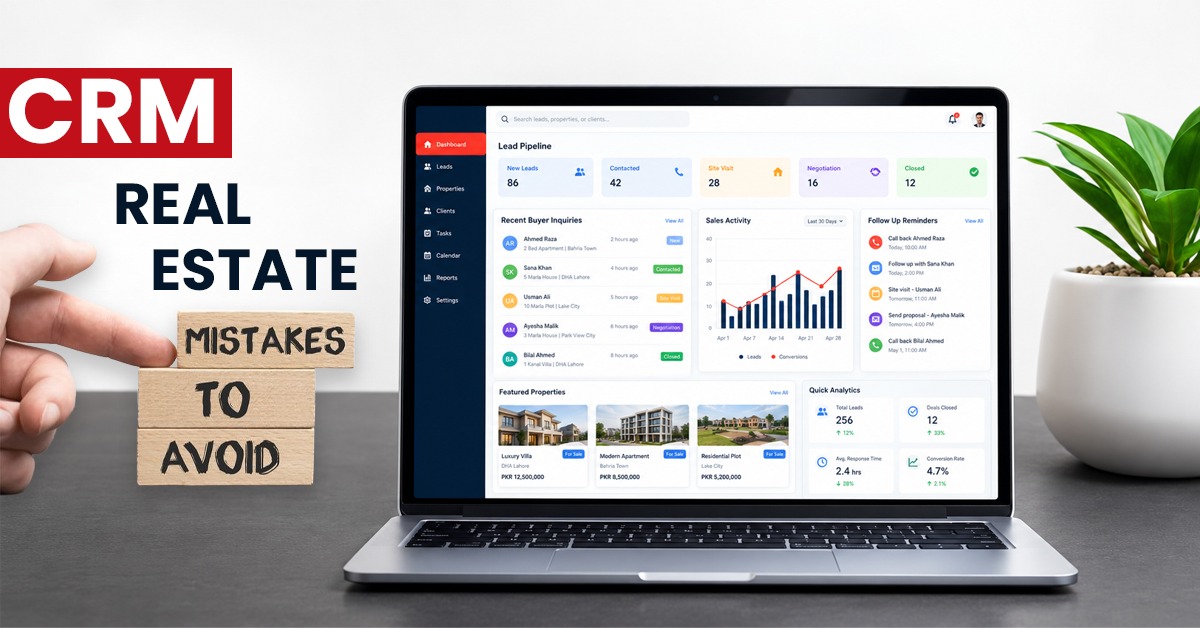
The goal of a CRM is to make your sales team faster, more organized, and more profitable. However, for many real estate firms, they purchase one and utilize the app halfway and then have no clue why they aren’t seeing any results. Most of the time, it is not the software itself that is causing the problem. It is typically the method the CRM is bought, installed, and applied.
Real estate teams tend to make several common errors when it comes to CRM software, and these are the ones to avoid!
One bad move is selecting a ‘generic’ CRM.
What is suitable for a general business may not be suitable for a property business, and vice versa. For example, a CRM designed for general businesses may not have features that property sales rely on, such as local units like marla and kanal, inventory tracking, site visit scheduling, and installment plans. Teams find themselves making out-of-the-way workarounds. Select a real estate CRM, or one that can be tailored to your real estate sales process.
Mistake 1: Lacking the necessary supplies or materials
Too many companies have a CRM in place, but don’t have a sales process mapped out first. If there are no stages in the pipeline, for example,, inquiry, site visit, negotiation, booking, closing, etc., there’s no consistency in data, and reports are meaningless. Establish the workflow, lead sources, and team roles before you start configuration.
Mistake 2: The first and third errors are due to bad data entry habits.
A CRM is just as helpful as the information it contains. Follow-ups are difficult, and reports are less reliable, due to missing or incomplete contact information, duplicate leads, or missing call notes. Establish basic guidelines of what will be documented, and introduce required fields to ensure that basic information is never omitted.
One of the most frequent mistakes is failing to follow up as soon as it is due. Mistake 4: Not following up promptly.
Leads are not followed up on time, and most deals are lost for this reason. Leads will fall through the cracks if agents are taking notes or relying on memory. Automated reminders for calls, meetings, and site visits. Tasks should also be tracked for overdue status, so that no inquiry goes cold.
Mistake 3: Failing to properly train the team.
Just a single demo will not suffice. If agents don’t understand the system, they steer clear of it and get back to using spreadsheets or WhatsApp. Train, guide, and support as appropriate for the role for the first 6-8 weeks. Have an “insider” champion to respond to inquiries promptly.
Mistake 4 – Not linking communication channels.
- Property clients connect using WhatsApp, telephone calls, e-mail and SMS. When these discussions take place outside of the CRM, you’re missing out on valuable history. Pick a CRM system that’s integrated with the principal channels so every single touchpoint gets recorded in the client profile.
- If you’re not tracking your lead sources, you’ll miss out on a great deal of information.
- If you don’t know where good leads will come from, you can continue to pay for leads and ads that don’t convert. Monitor and measure all the sources of leads and keep a close eye on how they get converted, and invest more in the ones that convert.
Mistake 5: Making the System too complicated.
Many fields, stages, and rules are off-putting to users. Begin with the basics, let the team get used to the basics, and then make it more challenging. Usability is key in getting a CRM to be used.
Mistake 6: Not following up on Reports and Analytics.
Some managers are using the CRM system merely as a contact list. Dashboards provide conversion rates, agent performance, pending follow-ups, and sales forecasts, enabling better decision-making. Check reports regularly and take them into consideration during team meetings.
Mistake 7: Security and Access Control
The information of your clients is important. Providing complete access to all users can lead to a leak or unintended changes. Keep information secure with role-based permissions, activity logs, and regular backups.
Final Thoughts
The only time a CRM system is beneficial is when it’s used correctly, and it’s deployed in a business system that complements your process. Don’t make these common mistakes: begin with a clear plan, educate your people on the plan, and review your data regularly. Your CRM system is a valuable sales tool if you use it the right way.
FAQs
1. The number one real estate agent error with a CRM is not leveraging it enough?
The most common issues are poor follow-up and inconsistent data entry. If you don’t follow up at the right time and keep accurate records, leads will slip away, and reports will not be reliable.
2. Real estate-specific CRMs offer advantages over generic CRMs, so why?
It contains inventory management, website visits routine, installment tracking and regional unit assistance, minimizing the requirement to expensive customization.
3. How to ensure consistency with my team on the use of the CRM?
Role-based training, explaining personal benefits, quick support, and having managers use the CRM reports during meetings.
4. How often would I wish to review the CRM reports?
Most teams find weekly reviews to be effective. They allow you to identify bottlenecks, monitor agent performance, and make adjustments as necessary.
5. What is the amount of time between implementing a CRM and getting the desired outcomes?
In most teams, the improvements in organization and follow-up are evident within a couple of weeks, and more significant improvements in conversion rates are generally visible within 2-3 months.