



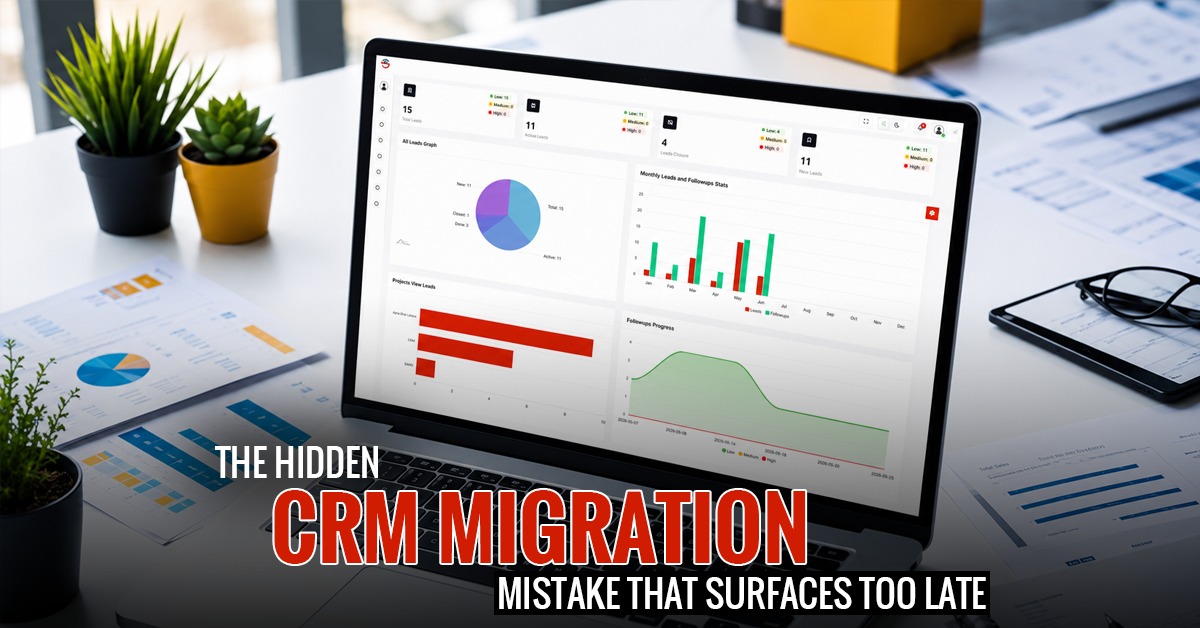
In the rapidly changing digital landscape, businesses need to continuously adapt to maintain their competitiveness. A transformational initiative that can have a significant impact is CRM (Customer Relationship Management) transformation. It’s not merely about maintaining contacts; today’s CRM systems are revolutionizing the way firms engage with customers, optimize operations, and promote sustainable growth.
What is CRM Transformation?
The upgrading or rethinking of the way a business runs its CRM system to improve customer service and optimize internal functions is called a CRM transformation. This might be introducing new technology, re-engineering processes, making connections between systems, or better usage of data.
CRM transformation is not a one-off upgrade but an ongoing process that drives effective customer experience towards the business objectives.
CRM transformation: why should it?
Consumers’ expectations have shifted. Today’s customers have a high level of demand for quick responses, personalized communication, and an interwoven experience across channels. Failure to do so means that businesses are in danger of losing their customers to another business.
Improve customer satisfaction with their experience
- Provide uniform and individualised customer experiences
- Ensure better inter-team communication.
- Increase sales and customer retention
- Gain better insights into customer behaviour
- The key elements of a successful CRM transformation.
CRM transformation for an integrated approach:
1. Customer-Centric Strategy
The customer is the key to your processes. Be aware of their journey, their needs, and their pain points so as to better design experiences.
2. Data Security and Management
Consistent and standardised information is essential. When CRM is integrated with other systems, there is a complete view of each customer.
3. Automation and Efficiency
Automation of follow-ups, email campaigns, and reporting eliminates errors and saves time.
4. Employee Adoption
No matter how good a CRM system is, it can’t work without the proper utilization by the employees. Training and ease of use are key.
5. Continuous Improvement
Monitor performance regularly and adjust processes to maintain the system in line with business objectives.
The benefits of CRM Transformation are as follows:
By investing in CRM transformation, businesses can reap several benefits:
- Improved Customer Experience
- Customised interactions, increased satisfaction and loyalty.
- Increased Sales Performance
- Improved lead handling and insights enable sales staff to execute sales more quickly.
- Enhanced Collaboration
There’s better collaboration between teams in Sales, Marketing, and Support.
Data-Driven Decisions
The real-time analytics give business leaders great insight for strategic planning.
Common Challenges
While there are numerous benefits to CRM transformation, there are also challenges:
Resistance to Change: Staff may be reluctant to change systems
Data Migration Issues: Moving data from legacy systems can be challenging.
Distributed and decentralized implementation: High initial costs for implementation and training
Integration Issues: May require some time to integrate CRM with other tools
The key to success is to plan and provide support to meet these challenges.
- Best Practices for CRM Transformation
- As a best practice, the following measures can be taken to ensure a smooth transition:
- Set clear targets and success criteria
- Select a CRM solution that’s appropriate for your enterprise.
- Include stakeholders from various departments. Engage multiple departments.
- Provide ongoing training and support
- Track and review performance and modify strategies accordingly.
Evolution of CRM: technology plays a crucial role.
Today’s CRM are built on sophisticated technology like Artificial Intelligence, cloud computing, and automation. These innovations enable:
- Using predictive analytics to make better decisions.
- AI Chatbots for real-time customer service.AI Chatbots for instant customer support.
- Automated marketing campaigns
- Access remotely using cloud-based platforms.
These features assist companies in being agile and responsive in a competitive setting.
Future of CRM Transformation
Personalisation and smart automation are the future of CRM. AI can provide businesses with valuable insights that help them predict customer needs and provide proactive solutions.AI can offer businesses valuable insights that can help them predict customer needs and provide proactive solutions.
With ongoing digital transformation, CRM will be increasingly vital, intelligent, and integrated for the success of any business.
Conclusion
CRM transformation isn’t simply about software; it’s about reconsidering your business relationship with clients. Organisations can build effective customer experiences and sustainable growth by concentrating on strategy, data, and user adoption.
Those businesses that adopt CRM transformation now will be more ready for what the future will bring.
FAQs
1. What is CRM transformation?
It is the process of optimizing the way a business utilises CRM systems, in order to improve the relationship with customers and the efficiency of the business.
2. Why is CRM Transformation necessary?
It enables businesses to keep up with today’s customers’ expectations, enhance sales, and make data-driven decisions.
3. How long does CRM transformation take?
This is not a one-off task but is generally a continuous process, and this depends on the size and complexity of the business.
4. What are the greatest problems with CRM?
Some of the typical obstacles involve employee resistance, data migration difficulties, and system integration.
5. Is there value for small businesses to be transformed by CRM?
Absolutely, even small businesses can enhance their customer management, streamline their operations, and accelerate their growth through the proper use of customer relationship management (CRM).