



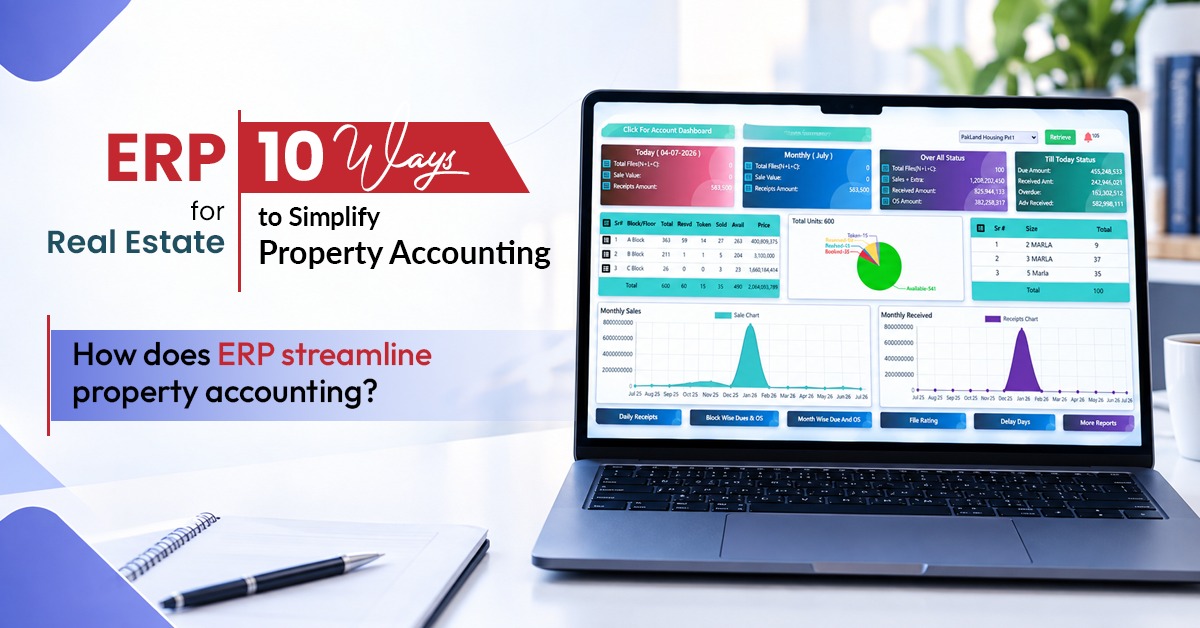
Accounting for properties is anything but easy. Commissions, tax records, installment plans, bookings, and rent are all managed by real estate businesses simultaneously. If this data is stored in a spreadsheet and different applications, there is a high likelihood of error and delay. Your accounts remain accurate and easy to manage, thanks to a real estate ERP system that gathers all of the above in one place. Let’s look at 10 ways it makes property accounting easy.
1. Stores all financial data in a single location.
An ERP system integrates sales, inventory, payments, and accounts into a single system. Once a booking or payment is made, it is posted all at once and is available everywhere, eliminating duplicate entries and providing your team with one source of truth.
2. Automates Installment Tracking
The ERP generates payment schedules, monitors due dates, logs payments, and calculates late fees according to your rules. It is easy to see in seconds which parties have paid and which are in arrears.
3. Streamlines Rent and Lease Accounting.
It can create rental property invoices, monitor tenant balances, and keep records of security deposits. Smoother monthly rent collection with reminders for rent renewal and unpaid rent.
4. Manages the Project Schedule
Establish a budget for every project and track the cost of materials, labor, and contractors against the budget. When expenses increase, you’ll be alert to the issue and take action before profits dwindle.
5. Manages Commissions Accurately
Commissions based on slabs/targets/payment milestones are automatically calculated based on your rules. It’s good to have a written evidence of what has been paid and due to avoid disputes with agents and dealers.
6. Produces Real-Time Reports
Live dashboards provide a view of cash flow, receivables, payables, and profit and loss at any point in time. Managers can make decisions based on up-to-date data rather than data from the end of the month.
7. Manages Multiple Projects and Branches.
You can have one housing scheme or many projects spread out over the cities; the ERP separates and consolidates accounts as required. Reports for the project and branch are automatically generated without additional effort.
8. Improves Cash Flow Visibility
The ERP lets you see future collections, outstanding dues, and future costs, allowing you to plan. You can budget your finances and not be caught out by having to pay bills to suppliers.
9. Strengthens Security and Control
Role-based access ensures that only financial information is accessible to authorised staff. You’ll have a system where those who change what and when are recorded in audit logs, helping to keep your business free of errors and misuse.
10. Makes Audits and Tax Filing Easier
All transaction records, documents, and reports are kept in a single location. If a request for information is made by the auditors or tax authorities, accurate information can be provided in a timely fashion without the need to go through files.
Top Features of a Real Estate ERP
Use software that is designed for real estate rather than a generic accounting program. It should offer installment plans, unit management, commission rules, and multi-project reporting. Look for integration with CRM, mobile access, and frequent backups. Request a live demo with your own workflow, and verify training and support are provided.
Final Thoughts
A real estate ERP converts complex property accounting into a streamlined, well-organized procedure. It saves time, reduces errors, and provides better control of finances by automating payments, tracking costs, and providing real-time reports. The right ERP can be a wise investment for developers and agencies aiming to expand with assurance.
FAQs
1. What is a real estate ERP system?
It’s software that coordinates sales, inventory, payments, accounting, and reporting for any real estate company in one system.
It’s software that coordinates sales, inventory, payments, accounting, and reporting for any real estate company in one system.
It streamlines entries, monitors installments, computes commissions, and generates reports, decreasing manual work and mistakes.
3. Can ERP also process installments?
Yes. It establishes payment schedules, keeps track of due dates, records payments, and automatically calculates late fees.
4. ERP can be suitable for small real estate businesses.
Yes. The majority of ERP solutions are scalable, meaning they can be implemented with the basic modules and expanded as the company expands.
5. What are the costs associated with a real estate ERP system?
It can take several weeks to a few months to put together the basic cloud systems, and customized systems could take longer, depending on the data and needs.