



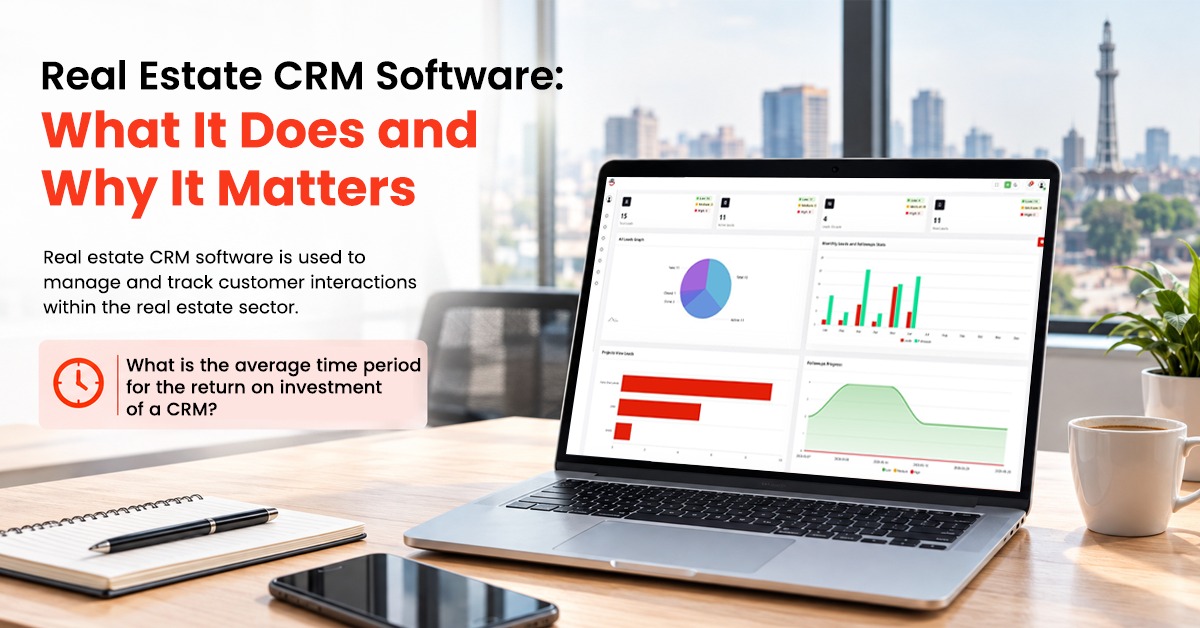
The real estate business is about conversations. Buyers query, sellers research agents, tenants need updates, and everyone wants a fast, professional response. Without leads and client information in phone contacts, notebooks, and chat threads, important opportunities are missed. Real estate CRM software does this, and a lot more, by integrating all of your connections into one streamlined system.
Real Estate CRM Software Explained.
Customer Relationship Management (CRM). Real estate CRM software is software that can be used to handle real estate leads, clients, properties, follow-ups, and the sales process, all in one place. It also comes with property sales-specific features like site visit scheduling, inventory tracking, and installment management, which are not found in traditional CRMs.
How to use a Real Estate CRM?
Plans and collects leads.
It comes in through web and social media inquiries, property portals, WhatsApp, call, and walk-ins. The CRM automatically captures them and keeps each lead in the system with contact information, budget, preferences, and where they came from. End the tedious process of manually entering data into a spreadsheet.
Delegates leads to the appropriate agent.
The system assigns leads according to various rules like location, project, or availability. This guarantees that all inquiries are answered promptly, and the agents are treated fairly.
Schedules follow-ups and reminders.
The vast majority of deals will close with a few conversations. The CRM also notifies agents to call, send a brochure, or confirm a site visit and documents notes so that any team member can seamlessly pick up the conversation.
Capable of following up the Sales Pipeline
A visual pipeline visualises where each lead is at, from inquiry to site visit, negotiation, booking, and closing. The managers will be able to identify bottlenecks, predict sales, and plan where to invest their efforts.
Manages Property Inventory
Agents can search for any properties that are for sale, units for rent, or listings to compare, and see the status and price. This is particularly helpful in areas where smaller measurements such as marla and kanal are used.
Handles Communication
The integration with WhatsApp, SMS, and e-mail allows teams to communicate with one another via one platform, but also maintain a complete history of communication within each client profile.
Keep track of payments and installments.
In the case of projects with installments, the CRM keeps track of due dates, payments, and any overdue amounts, then provides reminders to clients. This helps improve cash flow, as well as decreasing errors.
Generates reports and analytics
Dashboards display lead sources, conversion rates, agent performance, and sales goals. Data clarity enables you to make better decisions and see what is working and what is not.
Why It Matters
- Faster response times. Swift responses make customers happy. Automated messages and instant notifications enable you to get to leads before the competitors.
- Fewer lost opportunities. No matter what questions you ask, they are noted and followed up, so there is no reliance on memory.
- Better team accountability. Managers can view activity, tasks, and results for each agent without having to check in constantly.
- Smarter marketing spend. By knowing which channels are providing serious buyers, you can invest in the right places.
- Stronger client relationships. By completing the history and timely reminders, you can build trust, earn referrals, and win repeat business.
- Easier growth. As your team and project size grows, a CRM helps to organize your operations, rather than chaos.
How to make the most of your CRM?
Look for software that is specifically designed for real estate and that works well for your real estate sales process. Provide role-specific training, input the data at the same time each day, and have reminders as a daily routine. Go through reports every week, and discuss customization, support, and pricing with your vendor before you sign up. Always use a live demo and test with your own data.
Final Thoughts
A real estate CRM isn’t just a contact list. It’s a complete solution to help you collect leads, follow up, and track inventory, payments, and performance. Companies that utilize one react quicker, remain more organized, and complete extra sales. When you want to invest without missing opportunities, investing in the right CRM is an effective, strong choice.
FAQs
1. Real estate CRM software is used to manage and track customer interactions within the real estate sector.
It integrates leads, clients, property listings, follow-ups, communication, payments, and sales reports in a single system.
2. A real estate CRM is different from a traditional CRM in what way?
It has features that are specific to the property, like inventory management, site visit scheduling, and installment tracking- features that are unavailable in generic CRMs.
3. Does a real estate CRM effectively fit the needs of a small agency?
Yes. Organized leads and reminders for small agencies, and many vendors have reasonable plans that increase with the business.
4. Is it possible to connect WhatsApp with my website using a CRM?
Most real estate CRM software is designed to integrate with a website, SMS, email, and WhatsApp, which means that leads and messages are automatically captured in a single place.
5. What is the average time period for the return on investment of a CRM?
Many teams see increased organization and follow-up within weeks, and improved conversions typically take place over 2-3 months.