



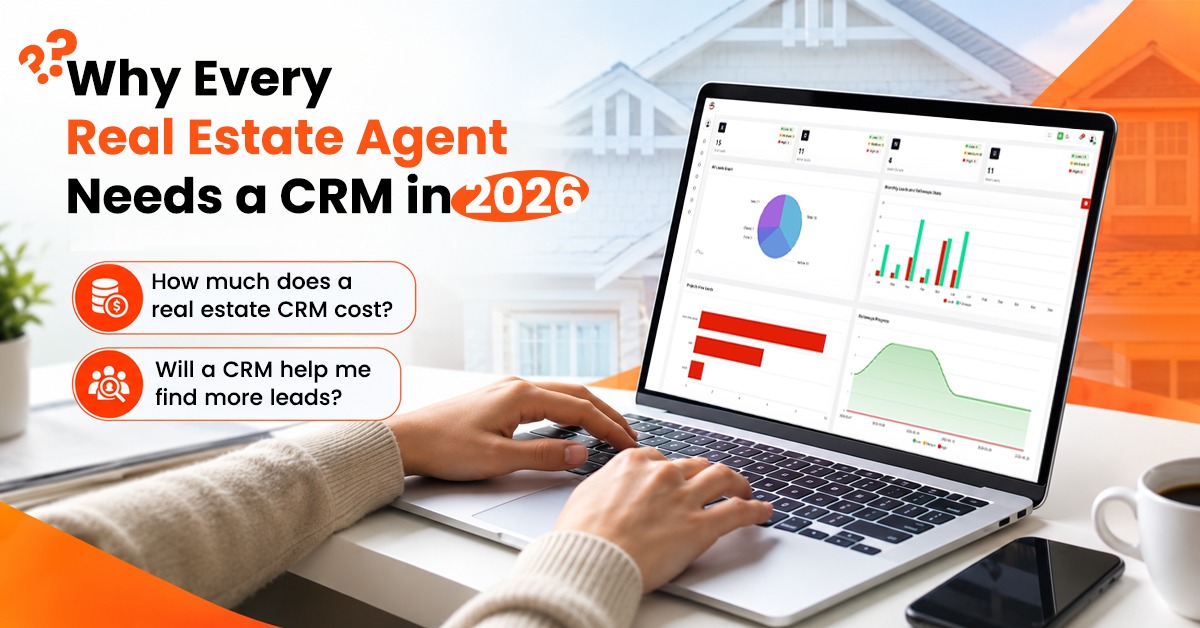
Real estate is a business that’s always had a relationship component to it, but the way clients discover and select agents is evolving. Now buyers and sellers ask through Facebook ads or property portals, WhatsApp and Instagram, as well as websites, and may contact multiple agents simultaneously. The first agent to respond and the agent who responds best wins. 2026 is no longer the time for choosing to have or not have a CRM (Customer Relationship Management) system. It’s the instrument that keeps your leads, clients, and deals organized so nothing goes out the window.
Leads Come From Everywhere
Many agents get inbound leads from a variety of sources each day. These leads will find their way into phone contacts, chat threads, notebooks, and spreadsheets without a central system. Some people forget them, others duplicate them, and you never know which one is really working. A CRM brings all of the enquiries into a single location, so you’ll know who’s calling, what they want, and what to do.
Speed Wins Deals
Clients rarely wait. You might not get the opportunity to reach out to an agent hours later when another agent has already seen the location. A CRM can automatically alert you to new leads, assign them to the appropriate agent, and send a prompt follow-up message. The quicker the response, the more conversations, site visits, and closings.
Follow-Up Is Where Sales Happen!
After the first call, most buyers aren’t making their purchase decision. They analyze their choices, consult with families, and come back in a couple of weeks. Those leads get lost when the agents depend on their memory. A CRM can set reminders for calls, meetings, site visits, and it has notes on each conversation. You can resume your work wherever you left off, and thus appear professional and trustworthy.
Be aware of the status of each deal.
A visual sales pipeline displays the stage that each lead is at, from enquiry to site visit, negotiation, booking, and closing. You can see which deals are ready to be acted on, which are near closing, and where prospects are “falling out the window. This transparency aids you in making decisions about your time and predicting income more accurately.
Match clients with appropriate property, matching clients with property.
Today’s CRMs combine property listings with client tastes. Once there is a new listing, you can easily locate buyers with a budget, location, and size that will suit the new listing. This makes your database a source of repeat business, instead of a list of forgotten contacts.
Establish Better and More Lasting Relationships
Referrals and repeat business are critical to real estate success. A CRM will keep you from forgetting to remind customers of birthdays, purchase anniversaries, rental renewals, and other key dates, as well as maintain a complete history of all communications with each customer. Regular communication maintains you as a top-of-mind agent when your clients or their friends are looking to hire an agent.
Measure What Works
Wasted marketing budgets are no marketing budgets at all. Using CRM Reports, you can see which channels are the most successful for creating leads, how many leads they convert, and the performance of each agent. Real data enables you to invest more in what works and less in what doesn’t.
Save Time With Automation
If you are sending out the same brochure, payment reminder, or appointment reminder over and over again, you’re wasting time! These are tasks that can be automated using CRM with WhatsApp, SMS, or email, allowing you more time to spend on negotiations and client meetings.
Work From Anywhere
A great deal of agents’ time is spent on home visits or client meetings. Mobile CRM access means you can update leads, log calls, check inventory, and check schedules on your phone, anytime, anywhere.
Here are some suggestions for beginning your research:
Select a CRM that is tailored to the real estate market, particularly for local requirements like marla and kanal units as well as installment monitoring. Begin by starting with the basic components such as lead capture, reminders, and pipeline tracking. Ensure you are trained, team members are trained, data is entered consistently, and review reports weekly.
Final Thoughts
Competition is tougher, and customers are more demanding in 2026. A CRM enables you to answer faster, follow up regularly, and deal with relationships professionally. The agents who have only one will have a definite edge, while the agents who have notes in an unorganized manner will risk losing deals that are theirs. A CRM is among the shrewdest investments you can make if you are looking to expand your business and close more deals.
FAQs
1. How much money is required for a CRM for real estate agents?
Software is a tool that keeps leads, client information, property listings, follow-ups, and sales momentum in a single streamlined system, streamlining agent relationships and sales closings.
2. Does the individual agent need to learn about the CRM?
For both, it is helpful. Reminders and organized records are the advantages solo agents can enjoy, whereas agency benefits can include team management, reporting, and lead distribution.
3. Will a CRM help me find more leads?
A CRM is not a magic bullet that generates leads on its own, but it enables you to gather every enquiry, get back to them quickly, follow up on them regularly, and know which sources are the best.
4. How much does a real estate CRM cost?
The cost of using the product varies by features and users. If you’re looking for a provider, you can consider both monthly or yearly plans, and some even have one-time licenses; compare your options and ask for a demo.
5. What is the length of time required to implement a CRM?
Setting up the basic needs can take a couple of days, and most agents get used to the features and contacts in a couple of weeks.