



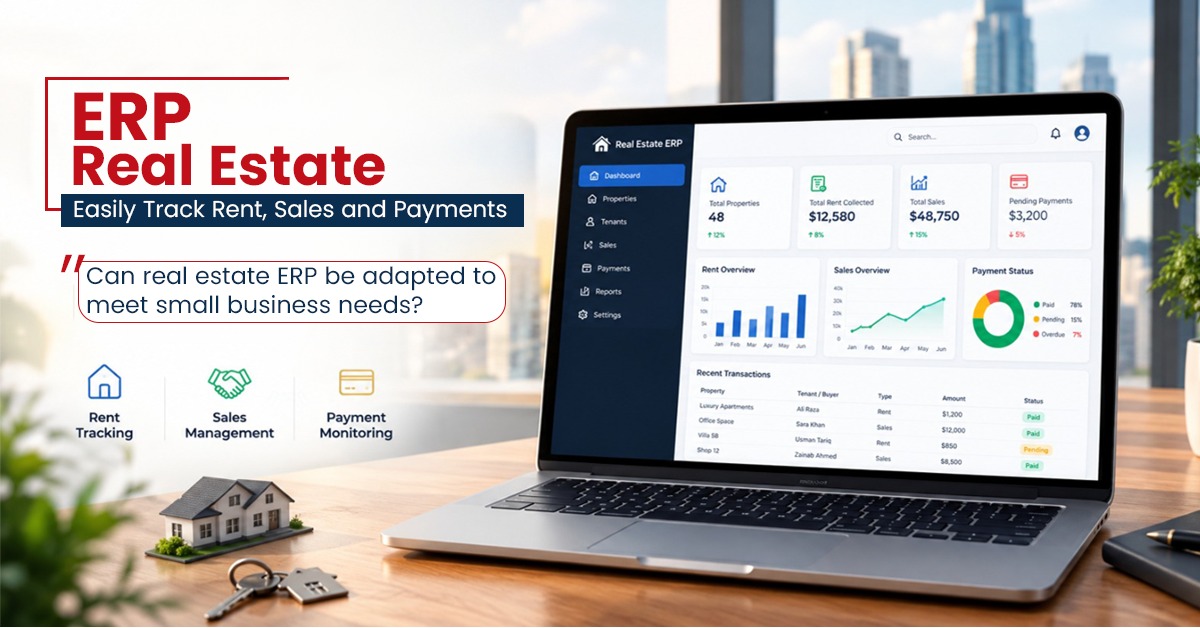
There is always cash coming in and going out of real estate businesses on a monthly basis; it’s just that it can be in the form of rent, booking, installments, commissions or maintenance costs. These records are likely to be in a myriad of spreadsheets, notebooks, and chat messages, resulting in mistakes. If you build an ERP specifically for real estate, you can integrate everything into the one system, and gain real-time, accurate management of all your finances and operations.
Why are scattered records a problem?
Manual tracking can result in non-payment, double payment, inaccurate reporting and tenant/buyer disputes. Managers have a hard time getting a real picture of the financial facts, and accountants spend hours reconciling the figures that ought to agree. These gaps will cost you more as your portfolio or project increases in size.
Monitoring Rent using ERP Tools
Automated Rent Schedules
All leases, rents, due dates and escalations are documented in an ERP. Automatically creates invoices and keeps the tenant ledger up to date whenever a payment is received, meaning you always know who’s paid and who’s behind.
Reminders and Overdue Alerts.
Manage and renew leases and renewals.
Lease start/end dates are maintained together and there are alerts before the lease ends. This will allow you to renew leases, adjust rents, or avoid long vacancies.
Keeping an eye on sales with ERP tools
The following is the lead to Booking in One Flow.
Real Estate ERP brings leads, site visits, bookings, and sales agreements together. Managers have visibility into the deal’s status and who is working best.
Live Inventory Control
Plots, units and properties are automatically updated when they are booked or sold. This helps to avoid double bookings and ensures the sales team has up-to-date availability.
Commission and Target Tracking
The system uses a set commission structure to automatically calculate commissions for the agents and monitors progress towards sales goals, minimising conflict and saving accounting time.
ERP Tools Make Tracking Payments Easier.
Learn how to use an installment plan for your payments.
The ERP generates schedules for installation, keeps track of the payments received, and displays the remaining payments for each customer for the developers and sellers. Receipts are instantly created and overdue payments are identified for follow-up.
Multiple Payment Methods
All payments (cash, bank transfer, cheque and online payments) can be booked to the right client or property. This will provide an audit trail and eliminate duplicate entries.
Integrated Accounting
All payments go directly to the accounting module, which automatically updates the ledgers, receivables and financial statements. This minimises manual input and streamlines month-end closing.
Provides reports that may be used to make better decisions.
Having all data in a single system allows you to produce reports of rent collection, outstanding dues, sales performance, inventory status, cash flow, etc. With project, property or date range filters, you will see trends and make all the right decisions, not guesses.
When you're looking to buy a Real Estate ERP, here are some of the things you need to consider.
Installment system, rent system, inventory system, and local units (marla/kanal) should be available. Determine if it provides mobile access, WhatsApp and SMS integration, role-based security, and support. When signing up, always ask for a live demo with your sample data before you sign up.
Final Thoughts
Spreadsheets and memory should not be used to track rent, sales and payments. A real estate ERP provides you with a single source of truth, automates repetitive tasks and maintains transparency and organization of your finances. This leads to quicker collections, reduced errors, improved relationships with customers, and a streamlined and more manageable business.
FAQs
1. Can a real estate ERP handle both home rentals and property sales?
Yes. With a good ERP, you’ll be able to view all the details of your contracts, sales bookings, installments and payments in a single platform.
2. How does ERP help in minimizing late rentals?
It automatically notifies you before and after the due dates and marks overdue payments as soon as they occur, and your staff can follow up quickly.
3. Is ERP capable of handling installment plans?
Yes. It develops payment schedules, tracks each installment, provides balance of unpaid amount, makes receipts and notifies you when payments are late.
4. Can a real estate ERP integrate with the accounting system?
When it comes to payments, most systems have an accounting system or they’re compatible to it, so payments update financial reports as well as ledgers automatically.
5. Can real estate ERP be adapted to meet small business needs?
Yes. Many ERP solutions have a scalable plan, which makes it appropriate for small agencies or landlords and offers room to grow.