



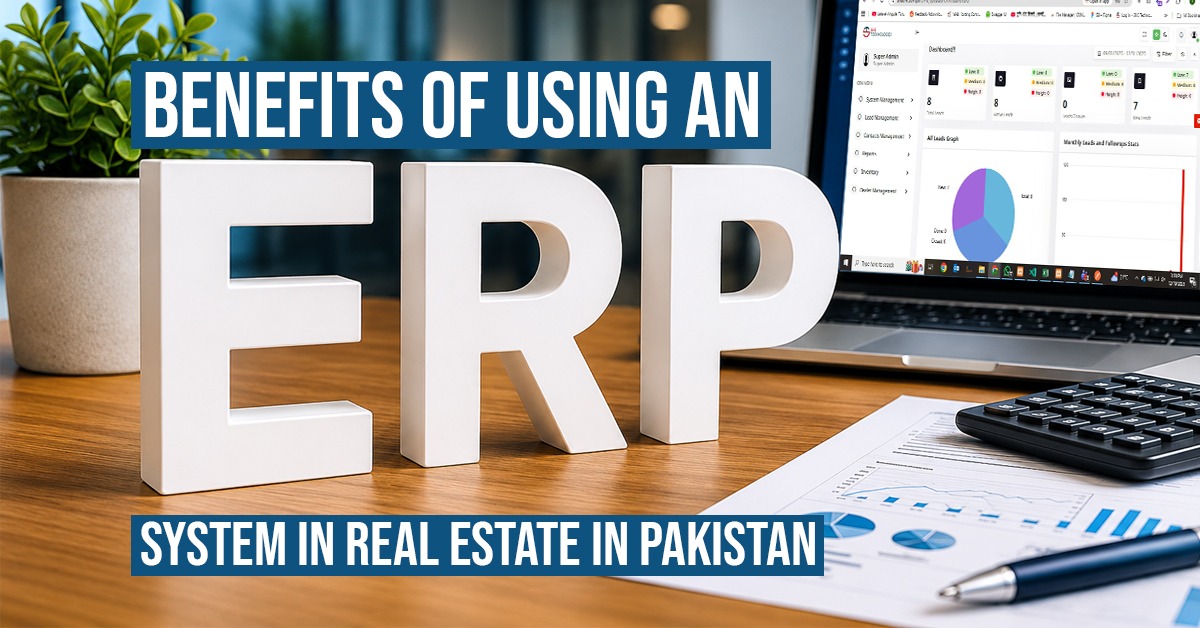
The real estate industry has seen a tremendous transformation in Pakistan, especially in urban areas, due to various factors including urbanization, rising investments, and competition among real estate agencies and developers. In such a competitive landscape, companies are looking for solutions that can help them streamline their processes, boost efficiency, and gain a competitive advantage. In this fast-paced world, businesses are increasingly adopting Enterprise Resource Planning (ERP) systems to optimize their operations, streamline efficiency, and stay competitive.
ERP systems have revolutionized the way real estate businesses in Pakistan handle their processes, be it property sales, customer interactions, financial management, or reports. In 2026, digital transformation continues to grow at a fast pace, making ERP solutions a critical tool for sustainable growth in the property industry.
Centralized Data Management for Better Control.
One of the major advantages of ERP systems for real estate is the centralized data management. Property businesses have a lot of data to handle, such as client data, property listings, transactions, and financial documents.
All this data is collected in one ERP system so managers can access real-time data wherever, whenever. This removes data silos, cuts duplication and guarantees data precision throughout departments.
A clean and simple sales and customer management system.
When it comes to real estate, the success of their sales processes and customer relationships is critical. ERP systems can be integrated with the CRM modules to get a full picture of customer interactions.
Whether it’s handling leads, processing inquiries, or closing sales, ERP software keeps all your sales activities in check and efficient. This results in quicker response rates, increased customer satisfaction, and increased conversion rates.
Financial Management and Transparency improving.
Financial management is a critical aspect of real estate operations. With an ERP system, accounting automation is enabled, such as invoice processing, payments, budgeting, and financial reporting.
ERP software enables businesses in Pakistan to keep accurate financial records and create detailed financial reports, which is crucial for regulatory compliance and tax management. This transparency not only helps in making decisions but also helps in gaining trust among stakeholders and investors.
Enhanced Project Management
Real estate projects are frequently multifaceted, with a number of stakeholders, timelines, and resources. ERP systems offer tools to help coordinate construction projects, track progress, and allocate resources effectively.
Real-time updates enable project managers to track all stages of project development, prevent delays, and take corrective measures. This helps projects to be completed on time and within budget.
Increased Operational Efficiency
Manual procedures can make the processes slow and prone to mistakes. ERP systems streamline manual processes like data entry, report generation, and workflow coordination.
This frees up time for employees to concentrate on other tasks that need their attention, such as activities that drive the growth of the business. This efficiency translates to faster processing speed and lower costs, while boosting overall productivity.
Enhanced real-time decision-making with insights.
ERPs also come with sophisticated analytics and reporting features, which enable managers to make informed decisions. Real-time data provides businesses with the ability to analyze market trends, monitor performance, and identify growth opportunities.
Property developers can, for instance, ascertain where sales are being made the best or which marketing approach is working the best. These insights help in making data-driven decisions and planning for the long term.
They are scalable and have growth opportunities. They are scalable and have growth opportunities.
When real estate companies grow, managing the business becomes more complex. ERPs can be scaled up as the company expands and can include additional modules and features as required.
Whether it’s expanding to new cities or managing larger projects, ERP solutions provide the flexibility required to support growth without compromising efficiency.
Conclusion
No more ERP systems in Pakistan’s real estate industry are luxury items; they are essential. ERP software brings together business processes in one system, allowing property companies to run more efficiently, cut expenses, and provide superior customer experiences.
Businesses in the real estate sector can be more successful in the competitive market today by adopting ERP technology for sustainable growth. By leveraging ERP technology, real estate businesses can be better equipped for sustainable growth and long-term success in the competitive market today.
FAQs
1. What is an ERP system in real estate?
The ERP system is software that connects different business processes like sales, finance, and operations together and connects them to a single platform to manage and operate them efficiently.
2. How does ERP benefit real estate companies in Pakistan?
ERP helps manage data, streamlines processes, increases financial transparency, and facilitates better decision-making.
3. ERP systems can be integrated with CRM software.
Yes, most ERP systems will have a CRM module or can integrate with CRM software to enhance customer management.
4. Will ERP work for small businesses in the real estate industry?
Yes, ERP solutions can be customized and scaled up to suit the requirements of small, medium, and large property businesses.
5. What does a real estate ERP system need to have?
Some of the main features include property management, financial tracking, CRM integration, project management, reporting tools, and cloud access.